
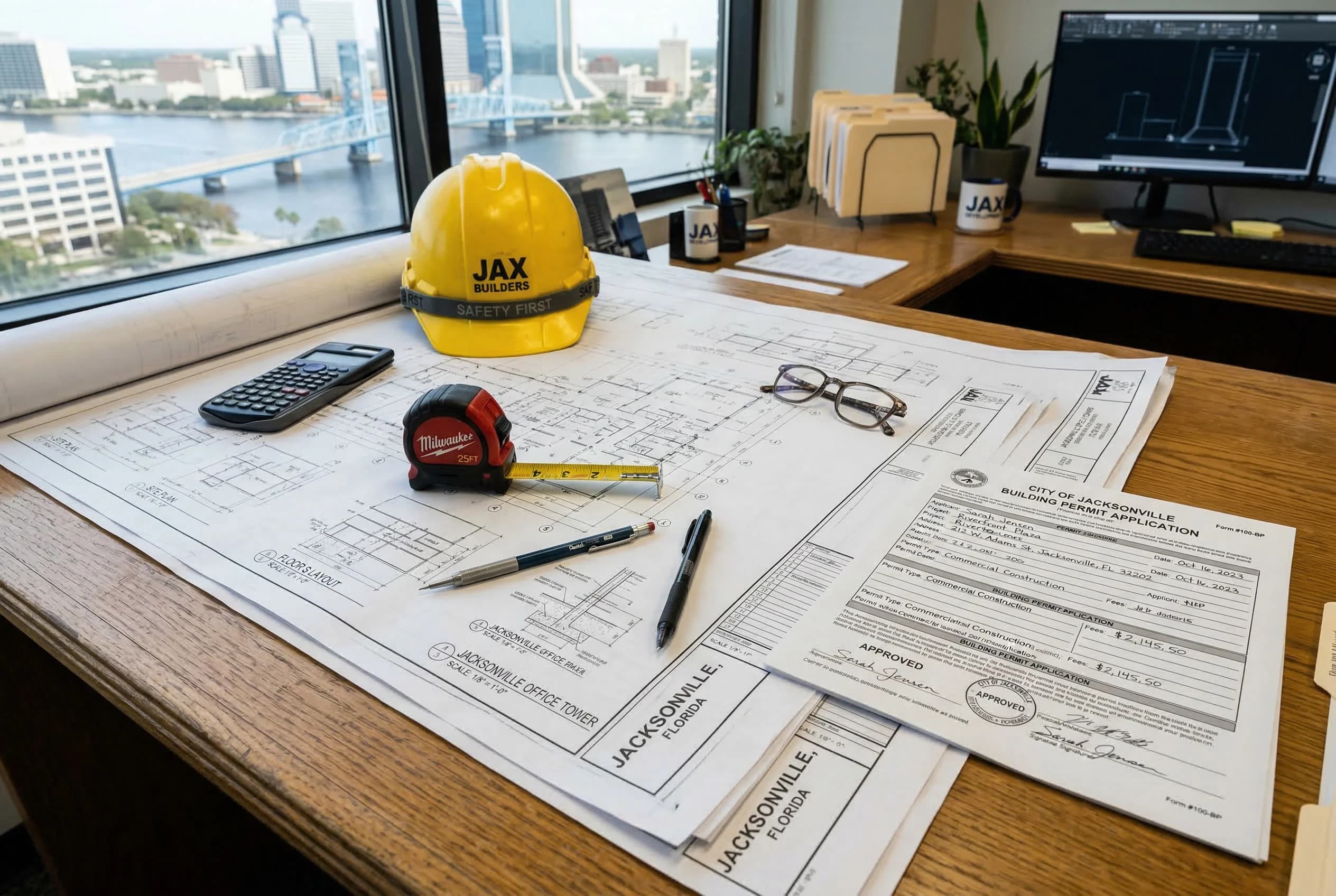
Let's get this out of the way: yes, you absolutely need a permit to build a pool in Jacksonville and all of Northeast Florida. No exceptions. No workarounds. No "my neighbor didn't pull a permit and it was fine" (spoiler: it won't be fine when they try to sell their house or their insurance company finds out).
The permit process can feel intimidating if you've never dealt with it before. County websites aren't exactly user-friendly, and the rules vary depending on where you live. That's why we put together this guide — and why iTopPools handles the entire permitting process for every pool we install.
But whether we're building your pool or not, here's everything you need to know. Check our service area page to confirm we cover your county.
Why Pool Permits Matter
Before we get into the how-to, here's why permits exist and why you should care:
- Safety. Permits ensure your pool meets Florida's barrier and safety requirements, which exist to prevent drownings — especially for children.
- Insurance. An unpermitted pool can void your homeowner's insurance coverage. If someone is injured in or around your unpermitted pool, you could be personally liable.
- Resale. When you sell your home, the buyer's inspector and title company will check for permits. An unpermitted pool can kill a sale, reduce your offer price, or require you to retroactively permit and potentially modify the pool at your expense.
- Code compliance. Building inspectors can require you to remove an unpermitted structure. Yes, that means filling in the pool.
Don't skip the permit. It's not worth the risk.
Duval County (Jacksonville): Step-by-Step
Jacksonville uses the JaxEPICS online portal for all building permit applications. Here's how the process works:
Step 1: Create a JaxEPICS Account
Visit the City of Jacksonville's Development Services website and create an account on the JaxEPICS portal. You'll need basic information: name, address, contact details. Your pool contractor can also submit on your behalf (and at iTopPools, we always do).
Step 2: Submit the Application
The permit application for a residential swimming pool requires:
- Completed application form with property owner information
- Site plan / survey showing the pool location relative to property lines, the house, easements, and setbacks
- Pool engineering drawings (provided by the pool manufacturer)
- Equipment specifications (pump, filter, heater, etc.)
- Barrier plan showing how you'll meet Florida's pool barrier requirements
- Electrical plan for the pool equipment
- NOC (Notice of Commencement) — this must be recorded with the Duval County Clerk of Courts before work begins
Step 3: Plan Review
Duval County's plan review for residential pool permits typically takes 25 to 30 business days. During review, the plans examiner checks for:
- Setback compliance (typically 5 feet from property lines, 10 feet from septic, varies by zoning)
- Barrier/fence compliance with FL Statute 515
- Electrical code compliance
- Drainage and grading
- No conflicts with easements or utilities
Step 4: Permit Approval and Inspections
Once approved, you'll receive your permit and can begin construction. During the installation, you'll need the following inspections:
- 1.Pre-pour / Excavation inspection — after the hole is dug, before the shell is set
- 2.Plumbing rough-in inspection — after plumbing is installed, before backfill
- 3.Electrical rough-in inspection — after electrical is run, before cover-up
- 4.Barrier inspection — verifying the fence/barrier meets code
- 5.Final inspection — everything complete, pool filled, equipment running
Duval County Permit Fees
Pool permit fees in Duval County typically range from $300 to $800, depending on the scope of work. If your project includes a screen enclosure, deck structure, or electrical subpanel, those may require separate permits with additional fees.
St. Johns County
St. Johns County (including St. Augustine, Ponte Vedra Beach, Nocatee, and World Golf Village) has its own building department and process.
Process Overview
- Applications are submitted through the St. Johns County Building Services office, either online or in person
- A site plan and engineered pool drawings are required
- Plan review typically takes 15 to 25 business days — often faster than Duval County
- Inspections mirror the Duval County process (excavation, plumbing, electrical, barrier, final)
- An NOC must be recorded before construction begins
St. Johns County Fees
Permit fees in St. Johns County typically range from $400 to $1,200, depending on the scope. St. Johns generally has slightly higher permit fees than Duval County but faster review times.
Special Considerations
- Nocatee and other master-planned communities may require HOA Architectural Review Board (ARB) approval before you even submit for a county permit. Start the HOA process first — it can take 2-6 weeks.
- Ponte Vedra Beach properties near the coast may have additional setback requirements due to coastal construction control lines (CCCL).
Clay County
Clay County covers areas including Orange Park, Fleming Island, Middleburg, and Green Cove Springs.
Process Overview
- Applications are submitted through the Clay County Building Department
- Required documents are similar: site plan, pool engineering, electrical plan, barrier plan
- Plan review typically takes 15 to 20 business days
- Clay County tends to have the fastest review times in the NE Florida area
Clay County Fees
Permit fees typically range from $300 to $800. Clay County is generally the most affordable of the four counties for pool permits.
Special Considerations
- Clay County has areas with significant clay soil (fitting, given the name) and high water tables. The building department may ask for additional engineering documentation related to drainage and dewatering.
- Some rural areas of Clay County rely on septic systems, which require 10-foot minimum setback from the pool excavation.
Nassau County
Nassau County includes Fernandina Beach, Amelia Island, Yulee, and Callahan.
Process Overview
- Applications are submitted through the Nassau County Building Department
- Same documentation requirements as other counties
- Plan review typically takes 20 to 30 business days
- Nassau County has been growing rapidly, which can occasionally extend review times
Nassau County Fees
Permit fees range from $400 to $1,500. Nassau County tends to have the highest permit fees in the NE Florida area, partly because of additional environmental review requirements in some zones.
Special Considerations
- Properties on Amelia Island may fall under additional coastal regulations and environmental overlays. Allow extra time for review.
- Some Nassau County properties are in flood zones that require elevation certificates and additional engineering.
Required Documents Checklist
No matter which county you're in, you'll need the following documents for your pool permit application:
- Completed permit application form
- Current property survey showing all structures, setbacks, and easements
- Site plan with proposed pool location and dimensions
- Pool manufacturer's engineering drawings and specifications
- Equipment schedule (pump, filter, heater, sanitizer)
- Electrical plan showing subpanel, bonding, and GFCI protection
- Barrier/fence plan meeting FL Statute 515 requirements
- Notice of Commencement (NOC) recorded with the county clerk
- HOA approval letter (if applicable)
- Proof of contractor licensing and insurance
Florida Statute 515: Pool Barrier Requirements
Florida law (Statute 515) requires specific safety barriers around all residential pools. These are non-negotiable and apply statewide:
Barrier Requirements
- Minimum 4 feet tall on all sides — measured from the outside
- No openings that allow passage of a 4-inch sphere (this prevents small children from squeezing through)
- Gates must be self-closing and self-latching — the latch must be on the pool side of the gate, at least 54 inches above the ground, or otherwise inaccessible to young children
- Gates must open away from the pool (outward swing)
- No handholds or footholds on the outside of the barrier that could help a child climb over
What Counts as a Barrier?
- A fence (chain link, aluminum, wood, PVC — must meet height and gap requirements)
- The walls of your home (if doors to the pool area have approved alarms or self-closing/self-latching mechanisms)
- A screen enclosure (if it meets the 4-foot height and gap requirements)
- A pool safety cover that meets ASTM standards (as an additional layer, not a sole barrier)
Common Barrier Mistakes
- Forgetting about the back door. If your home's back wall serves as part of the pool barrier, every door and window opening to the pool area needs an approved alarm or self-closing/self-latching hardware.
- Fence gaps. Even small gaps under a fence — from uneven ground — can cause a failed inspection if a 4-inch sphere can pass through.
- Climbable objects near the fence. Planters, AC units, or stored items near the pool fence that a child could use to climb over will trigger a barrier inspection failure.
Permit Timeline: What to Realistically Expect
Here's a realistic timeline from "let's build a pool" to "let's go swimming":
| Phase | Duration | Notes |
|---|---|---|
| Contract & Design | 1-2 weeks | Choosing your pool, finalizing details |
| HOA Approval (if needed) | 2-6 weeks | Start this early |
| Permit Submission & Review | 25-30 business days | Duval County; other counties may be faster |
| Revisions (if needed) | 5-10 business days | Not always needed |
| Pool Shell Manufacturing/Delivery | 2-4 weeks | Barrier Reef production schedule |
| Installation | 7-10 business days | Excavation through startup |
| Final Inspection | 1-3 business days | Scheduling with the county inspector |
Total realistic timeline: 10-16 weeks from signing a contract to swimming. This can be longer if your HOA process is slow or if the county requests plan revisions.
Common Causes of Permit Delays
Based on our experience in the Jacksonville market, here are the most common reasons for permit delays:
- 1.Incomplete application. Missing documents are the number-one cause of delays. The county won't start review until the application is complete.
- 2.Survey issues. An outdated survey that doesn't show recent additions (patios, fences, sheds) can cause rejection. You may need a new survey.
- 3.Setback violations. The proposed pool location is too close to property lines, easements, or septic systems. This requires redesigning the layout.
- 4.Easement conflicts. Utility or drainage easements running through your backyard may restrict where the pool can go.
- 5.HOA delays. Waiting for HOA approval before submitting the county permit. Always start the HOA process as soon as possible.
- 6.County backlog. During peak season (January through April), review times can stretch longer as everyone is planning their summer pool.
The Notice of Commencement (NOC)
The NOC is a legal document that must be recorded with your county's Clerk of Courts before any construction work begins. It establishes the start date of the project and provides legal protection for you and your contractors.
Key points about the NOC:
- It must be signed by the property owner
- It must be recorded (filed) with the county clerk — not just signed
- It must be posted at the job site during construction
- It establishes a timeline for lien rights
Your contractor should prepare the NOC for you. At iTopPools, we handle the NOC preparation and recording as part of our standard process.
How iTopPools Handles All of This for You
Look, we get it. This is a lot. Permits, NOCs, barrier codes, inspections, portal accounts — it's enough to make you want to just buy an above-ground pool and call it a day.
That's why we handle 100% of the permitting process for every pool we install:
- We prepare all documents and drawings
- We submit the permit application on your behalf
- We coordinate with the county during plan review
- We handle any revision requests
- We schedule all required inspections
- We prepare and record your NOC
- We coordinate with your HOA if applicable
- We ensure barrier compliance before the final inspection
The permit process is included in your project cost. You don't lift a finger.
Get Started on Your Pool Project
Have questions about permits in your specific county or neighborhood? We're happy to help — even before you've decided to move forward with a pool.
[Get Your Free Quote at itoppools.com/quote](https://itoppools.com/quote)
We'll assess your property, identify any potential permit challenges, and give you a clear timeline for your specific situation. No surprises, no guesswork.
Have more questions about the pool-building process? Visit our frequently asked questions page.